
Introduction
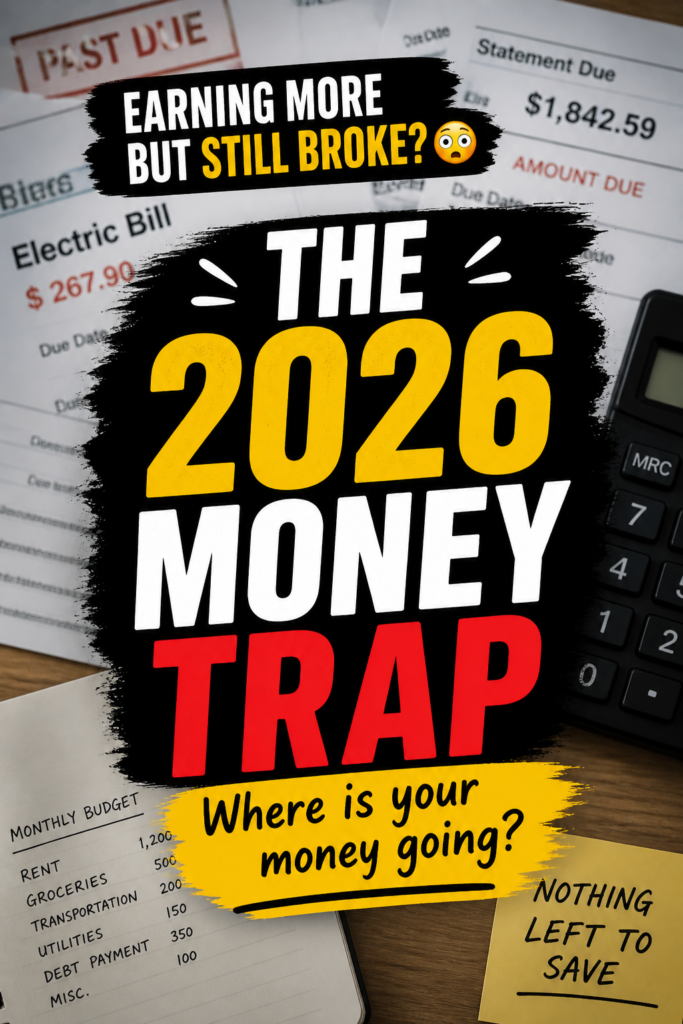
In 2026, Earning More But Saving Nothing something strange is happening across the United States. Salaries are increasing, job opportunities are growing, and more people than ever are finding ways to earn extra income through side hustles and freelance work. On paper, it looks like financial progress.
But in reality, millions of Americans are asking the same question:
“If I’m earning more, why am I still not saving anything?”
This contradiction is not just a personal issue — it’s a widespread financial pattern. People are working harder, earning more, yet feeling just as financially stressed as before. Savings accounts remain low, emergency funds are missing, and long-term financial goals feel out of reach.
This is what experts are now calling the “2026 Money Trap” — a situation where higher income does not translate into financial stability.
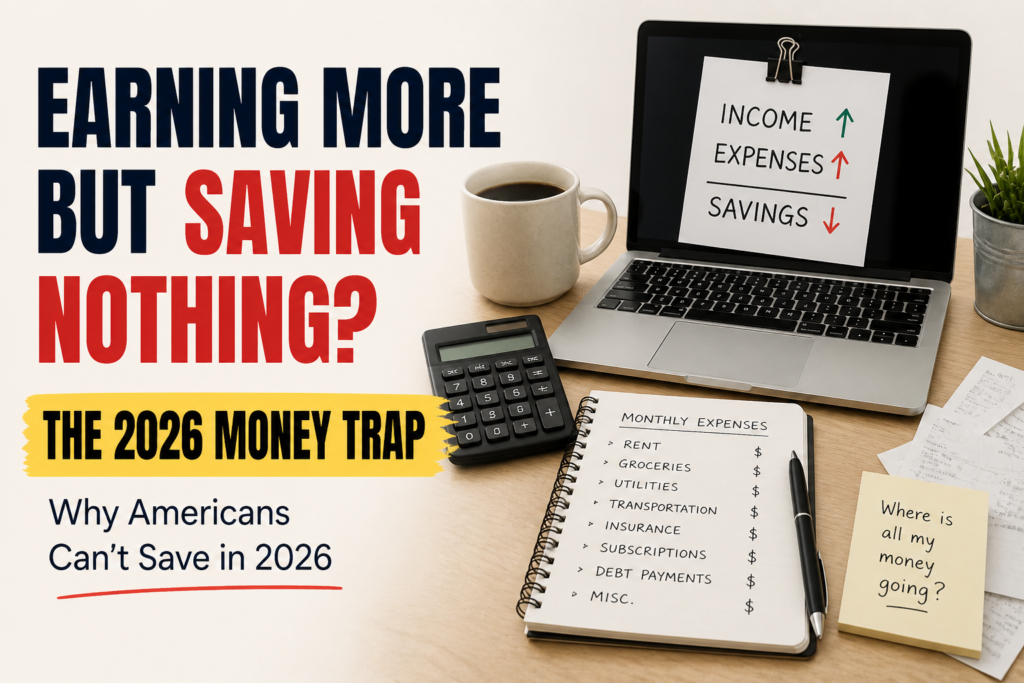
Table of Contents
The Illusion of Financial Growth
At first glance, income growth seems like a positive sign. Many workers have seen salary increases over the past few years. However, this increase often creates a false sense of progress.
Why?
Because income growth is being matched — and often exceeded — by rising expenses.
From rent to groceries, from insurance to transportation, the cost of living has increased significantly. What used to be affordable just a few years ago now takes up a larger portion of monthly income.
The result: Higher income, but no real financial improvement.
Cost of Living Is Rising Faster Than Income
One of the biggest reasons behind this money trap is the rapid rise in living costs.
In 2026, basic expenses have become more expensive:
- Rent prices continue to increase in major cities
- Grocery bills are noticeably higher
- Fuel and transportation costs fluctuate frequently
- Healthcare expenses are rising
Even small increases in these areas can have a major impact on monthly budgets.
When essential costs increase, savings automatically decrease.
Lifestyle Inflation: The Hidden Habit
Another major factor is lifestyle inflation — a silent financial habit that affects almost everyone.
When people start earning more, they naturally improve their lifestyle:
- Better restaurants instead of home-cooked meals
- Premium subscriptions instead of free versions
- Frequent shopping and online purchases
- Upgrading phones, gadgets, or cars
These changes feel normal and justified. After all, people believe they’ve “earned” a better lifestyle.
But the problem is simple:
Spending rises along with income.
Instead of saving more, people adjust their lifestyle to match their earnings — leaving savings unchanged.
The Subscription Economy Is Draining Money
In today’s digital world, subscription-based services have become unavoidable.
Most people now pay for:
- Streaming platforms
- Music apps
- Cloud storage
- Fitness memberships
- Software tools
Individually, each cost seems small. But combined, they create a significant monthly expense.
The biggest issue?
These payments are automatic.
Since subscriptions are deducted without effort, people often forget how much they are actually spending.
Hidden Fees Are Everywhere
Another reason people struggle to save is the rise of hidden costs.
These include:
- Convenience fees
- Delivery charges
- Platform service fees
- Late payment penalties
- Credit card interest
While each fee may seem minor, together they create a steady drain on finances.
Over time, these hidden expenses can cost hundreds — even thousands — of dollars per year.lysis on hidden fees costing Americans thousands, where small charges quietly drain financial stability.
Debt Is Eating Up Income
Debt has become a major financial burden in 2026.
Many individuals are dealing with:
- Student loans
- Credit card balances
- Personal loans
- Monthly EMIs
Instead of saving money, a large portion of income goes toward repaying past expenses.
This creates a difficult cycle:
Income is used for debt
Expenses continue to rise
Savings never grow
Breaking this cycle is one of the biggest financial challenges today.
Emergency Expenses Are No Longer “Rare”
Unexpected expenses are becoming more frequent.
In the past, emergencies were occasional. Now, they feel constant:
- Medical bills
- Car repairs
- Sudden rent increases
- Job instability
Without savings, people rely on credit or loans — which increases financial pressure even more.
This keeps individuals stuck in a loop where saving becomes nearly impossible.
Why Budgeting Alone Is Not Enough
Budgeting is often seen as the solution to financial problems. While it is helpful, it is not always enough in today’s economic environment.
The issue is deeper than just spending habits.
Even disciplined individuals struggle because:
- Essential expenses consume most of the income
- Inflation reduces purchasing power
- Unexpected costs disrupt financial plans
Budgeting helps control money, but it cannot fix structural financial pressure.
The Psychological Impact of Financial Stress
Money problems are not just financial — they are emotional too.
Constant financial pressure leads to:
- Stress and anxiety
- Poor decision-making
- Impulse spending
- Lack of long-term planning
When people feel overwhelmed, they are more likely to spend money for short-term relief rather than long-term stability.
This creates a cycle that is difficult to break.
The Reality Gap: Expectations vs Life
One of the biggest problems in 2026 is the gap between expectations and reality.
People believe that earning more will automatically improve their life. But in reality:
- Expenses increase along with income
- Financial responsibilities grow
- Economic uncertainty remains
This creates frustration, especially among younger generations trying to build financial stability.n, especially among Millennials and Gen Z, who are already facing rising costs and limited financial flexibility.
Why Millennials and Gen Z Feel It More
Younger generations are facing this issue more intensely.
They deal with:
- Higher education costs
- Expensive housing markets
- Job market uncertainty
- Social pressure to maintain a lifestyle
Even with good salaries, saving money feels out of reach.
How to Escape the 2026 Money Trap
While the system is challenging, small changes can make a big difference.
1. Track Every Expense
Understanding spending patterns is the first step.
2. Reduce Unnecessary Subscriptions
Cancel services that are not essential.
3. Avoid Lifestyle Inflation
Increase savings instead of expenses when income grows.
4. Build an Emergency Fund
Even small savings can provide security.
5. Focus on Long-Term Planning
Think beyond monthly expenses and prioritize financial stability.
Final Thoughts
The biggest lesson of 2026 is clear:
Earning more does not guarantee saving more.
The modern financial system is designed in a way that encourages spending, increases costs, and makes saving difficult. This is why so many Americans feel stuck, even with higher incomes. Understanding the problem is the first step toward solving it.
This is not just a personal finance issue — it’s a structural shift in how money works today.
The 2026 money trap shows that financial stability is no longer just about income. It’s about managing rising costs, controlling hidden expenses, and building smarter financial habits.
Do you feel like you’re earning more but saving less in 2026?
Share your experience — your story might help others understand they’re not alone.
Pingback: 7 Best Budget Planners and Money Management Books in 2026 (Improve Your Finances Fast)
Pingback: Japan Earthquakes today 2026: Economic Impact, Business Risks & Financial Lessons