
Introduction
Let’s be honest: in 2026, the “math” of daily life has completely shifted. Between the quiet “subscription creep” on our bank statements and the stubborn rise of living costs across the US, it often feels like our paychecks are shrinking before we even have a chance to breathe. We’ve all been there—earning a decent income, yet somehow feeling like we’re just running in place. If you’re tired of the “where did it all go?” feeling, finding the best budget planners and money management books is the first step toward reclaiming your financial power and building habits that actually stick.
In this guide, I’ve narrowed down seven essential tools that bridge the gap between “knowing” what to do and actually “doing” it.
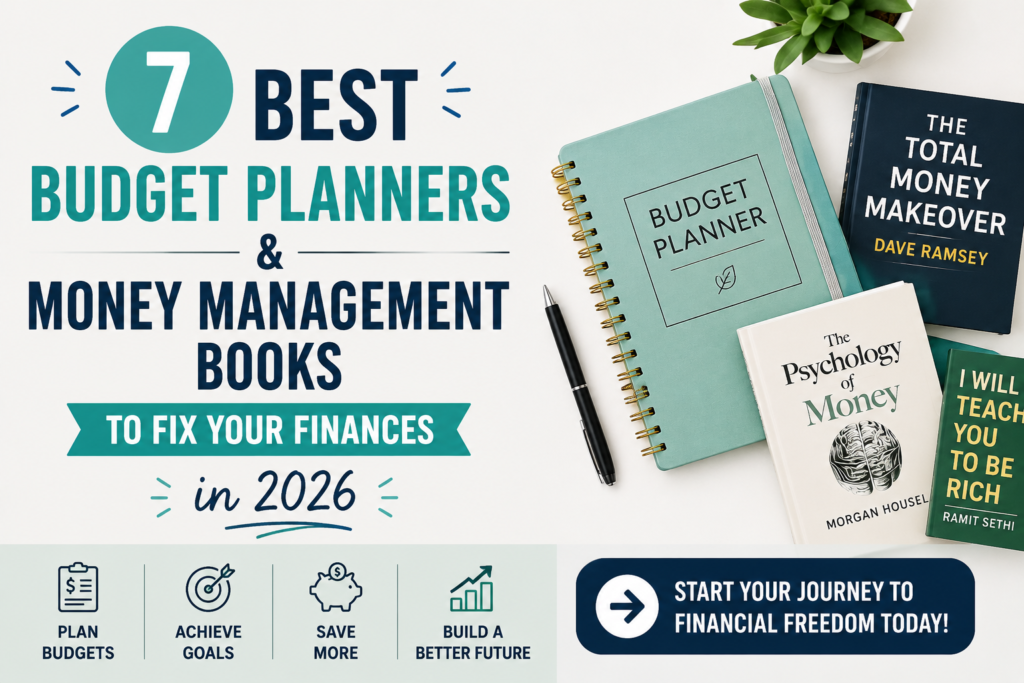
Table of Contents
Why Best Budget Planners and Money Management Books Still Matter in 2026
Even with the rise of budgeting apps, many financial experts still recommend physical planners and educational books.
Here are a few reasons why they remain popular:
- Better awareness of spending
Writing down expenses helps people become more aware of their spending habits. - Clear financial planning
Budget planners allow you to map out monthly income, bills, and savings goals in one place. - Long-term financial knowledge
Money management books provide strategies for saving, investing, and building wealth over time. - Reduced financial stress
Having a clear financial plan often reduces anxiety related to money.
When combined, planners and books can provide both practical tools and financial education.
“Disclosure: This post may contain affiliate links, meaning I get a commission if you decide to make a purchase through my links, at no cost to you.”
| Tool | Best For… | Key Vibe | Check price |
|---|---|---|---|
| Clever Fox | Detailed Tracking | Goal-oriented & disciplined | View on Amazon |
| Erin Condren | Visual Planners | Creative & colorful | View on Amazon |
| The Total Money Makeover | Debt Crushers | No-nonsense & “tough love” | View on Amazon |
| Rich Dad Poor Dad | Budgeting | Wealth Building | View on Amazon |
1. Clever Fox Budget Planner
The Clever Fox Budget Planner is widely recommended for people who want a structured way to manage their finances. I personally found the Clever Fox planner a bit too detailed for my taste, but if you love data, it’s perfect.
This planner focuses on goal setting, expense tracking, and long-term financial planning. It allows users to break down their financial goals into monthly and weekly actions.
Key features include:
- Monthly budgeting pages
- Expense tracking sections
- Savings goal planning
- Debt tracking pages
The layout is simple and easy to understand, which makes it suitable for beginners.
Best for: People who want a detailed and organized budgeting system.
2. “The Total Money Makeover” by Dave Ramsey
One of the most well-known personal finance books is The Total Money Makeover by financial educator Dave Ramsey.
What I appreciate most about Ramsey’s approach is the focus on small wins. The ‘Baby Steps’ method isn’t just about math; it’s about the psychological momentum you get from seeing a small debt disappear. In 2026, when financial stress is high, that kind of ‘quick win’ is exactly what keeps people from giving up.
The core idea is simple: create a strong financial foundation by paying off debt, building an emergency fund, and focusing on long-term wealth building.
Readers appreciate the book because it provides clear guidance and real-life examples of people who successfully improved their finances.
Best for: Individuals trying to eliminate debt and rebuild financial stability.
3. “Rich Dad Poor Dad” by Robert Kiyosaki
Rich Dad Poor Dad by Robert Kiyosaki is considered one of the most influential personal finance books of all time.
Instead of focusing only on budgeting, the book explains the mindset behind wealth building.
Key lessons include:
- Understanding assets vs liabilities
- The importance of financial education
- Building income streams beyond a traditional job
The book encourages readers to think differently about money and investing.
Best for: People who want to improve their financial mindset and understand wealth building.
4. Erin Condren Budget Planner
The Erin Condren Budget Planner is popular among users who prefer a visually organized financial planning system.
The planner includes sections for:
- Monthly income tracking
- Bill payment reminders
- Savings progress tracking
- Expense categorization
The design is colorful and motivational, which encourages consistent budgeting habits.
Many users find that having a dedicated planner helps them stay accountable to their financial goals.
Best for: Individuals who want a visually appealing and structured budgeting tool.
5. “The Psychology of Money” by Morgan Housel
The Psychology of Money by Morgan Housel explores how emotions and behavior influence financial decisions.
Rather than focusing only on numbers and formulas, the book explains why people make certain financial choices.
Key topics include:
- Long-term investing
- The role of patience in wealth building
- How financial habits shape outcomes
Why it’s a must-read: Most finance books tell you what to do with your math, but Morgan Housel explains why we do silly things with our cash.
The Human Take: It’s not a dry textbook. It reads like a series of short stories that help you realize that being “good with money” is more about your behavior and ego than how high your IQ is. If you’ve ever made an impulse buy and regretted it, this book is for you.
Best for: People who want to understand the psychology behind financial decisions.
6. Legend Planner Budget Organizer
The Legend Planner Budget Organizer is designed for people who want a highly structured financial planning system.
The planner helps users break financial goals into manageable steps.
Features include:
- Expense tracking sheets
- Savings goal templates
- Debt payoff planning pages
- Financial habit tracking
It also includes motivational prompts that encourage users to stay consistent with their budgeting habits.
Best for: Individuals who want a detailed financial organization system.
7. “I Will Teach You To Be Rich” by Ramit Sethi
I Will Teach You To Be Rich by Ramit Sethi focuses on practical money strategies for modern life. Ramit Sethi’s approach is perfect for those of us who hate the word ‘no.’ Most finance gurus tell you to stop buying lattes; Ramit tells you to buy as many lattes as you want, provided you’ve automated your savings and investments first. It’s a ‘no-guilt’ philosophy that feels refreshing in 2026. He focuses on ‘Big Wins’—like negotiating your salary or automating your 401k—so you don’t have to stress over the $5 purchases.
The book explains topics such as:
- Automating savings
- Managing credit cards responsibly
- Negotiating bills and expenses
- Building long-term investments
The author uses a practical and straightforward approach that many readers find relatable.
Best for: Young professionals who want practical strategies for managing money.
How to Choose the Right Budget Planner or Finance Book
Not every financial tool works for everyone. Choosing the right planner or book depends on personal preferences and financial goals.
Here are a few factors to consider:
1. Your Financial Goals
If your main goal is debt reduction, best budgeting books focused on financial discipline may be helpful.
If you want daily spending control, a budgeting planner may be more useful.
2. Learning Style
Some people prefer structured planners, while others prefer learning strategies through books.
Combining both approaches often provides the best results.
3. Simplicity and Consistency
The most effective budgeting system is the one you can follow consistently.
Choose tools that feel simple and practical rather than overly complicated.
Common Budgeting Mistakes to Avoid
Even with the best financial tools, some common mistakes can prevent progress.
- Ignoring small expenses
Small daily purchases can add up quickly over time. - Not tracking spending regularly
Budget planners only work when updated consistently. - Setting unrealistic budgets
Budgets should allow flexibility for occasional spending. - Lack of financial goals
Clear goals make best budgeting books more motivating and effective.
Avoiding these mistakes can help people build sustainable financial habits.
Why Financial Planning Is Important in Today’s Economy
Economic uncertainty, inflation, and rising living costs have made financial planning more important than ever.
Without a clear financial plan, it becomes easy to lose track of expenses and fall into cycles of debt or financial stress.
Budget planners and finance books provide tools that help individuals:
- Track income and expenses
- Build emergency savings
- Plan long-term financial goals
- Develop healthy money habits
Over time, these small habits can create significant financial stability.
Final Thoughts
Taking control of your finances does not require complicated strategies. In many cases, the most effective solutions are simple tools and clear financial education.
Budget planners help organize daily spending, while money management books provide valuable insights into building long-term financial success.
Whether you choose a structured planner like the Clever Fox Budget Planner for beginners or learn financial strategies through books such as The Psychology of Money or Rich Dad Poor Dad, the key is consistency.
Developing better financial habits today can create a stronger and more secure financial future in the years ahead.
Disclaimer: I am not a financial advisor. The information provided in this article is for educational and informational purposes only. Please consult with a professional before making major financial decisions.
Pingback: 10 Hidden Money Habits That Keep People Broke
Pingback: Google Pixel 9 Review 2026: Is It Really Worth the Money?