
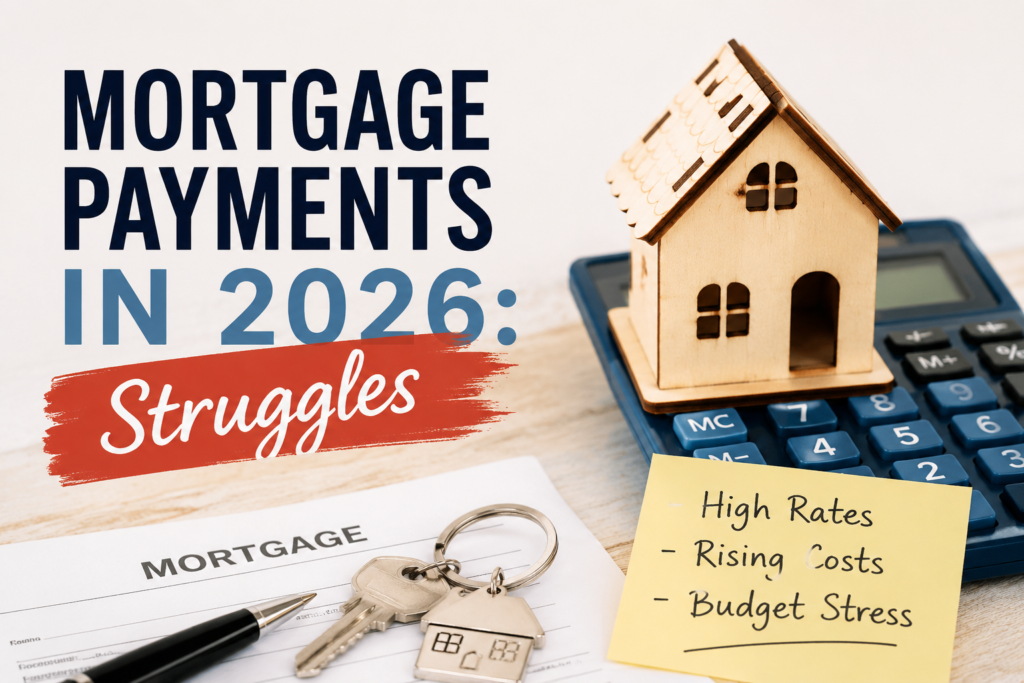
For many Americans, owning a home once represented stability, security, and financial success. But in 2026, that dream is becoming harder to maintain. Across the United States, more homeowners are struggling to keep up with their monthly mortgage payments as inflation, rising living expenses, and high interest rates continue putting pressure on household budgets.
From middle-class families to first-time homebuyers, millions of people are feeling the effects of a changing economy. The cost of basic staples like eggs and milk has seen double-digit increases in some regions, utility costs continue climbing, insurance premiums are increasing, and credit card debt has reached record levels. As a result, many Americans are falling behind on mortgage payments in 2026, creating growing concerns about the housing market and the financial future of many households.
While experts do not believe the situation is identical to the 2008 housing crash, the financial stress being experienced by homeowners today is very real.
Table of Contents
Disclosure: As an Amazon Associate, I earn from qualifying purchases
The Growing Financial Pressure on American Families
Over the past few years, the cost of living in America has increased significantly. Even though wages have risen slightly in some industries, they have not kept pace with inflation.
For the average household, everyday expenses now consume a larger portion of monthly income than before. Families are spending more on:
- groceries
- fuel
- healthcare
- rent and mortgages
- insurance
- transportation
- childcare
This financial pressure leaves less room for savings or emergencies. Many homeowners who were financially comfortable just a few years ago are now struggling to balance their monthly expenses.
Mortgage payments, which are usually the largest monthly expense for families, have become especially difficult to manage.
Why Mortgage Payments in 2026 Are Becoming Harder to Afford
One major reason Americans are falling behind on mortgage payments in 2026 is the sharp rise in interest rates over recent years.
During the low-interest period after the pandemic, many buyers entered the housing market because monthly payments seemed affordable. But as inflation increased, the Federal Reserve raised interest rates multiple times to slow down the economy.
Higher interest rates affected homeowners in several ways:
Adjustable-Rate Mortgages Became More Expensive
Some homeowners had adjustable-rate mortgages that initially offered lower payments. As rates increased, their monthly mortgage costs also rose, sometimes by hundreds of dollars per month.
New Homebuyers Paid Much Higher Prices
People who purchased homes recently often entered the market at higher home prices and higher interest rates. This combination created extremely expensive monthly payments.
“Market experts are sounding the alarm, noting that this isn’t a sudden crash, but a gradual ‘slow-burn’ pressure on household equity.”
Property Taxes and Insurance Also Increased
In many states, homeowners are paying more for:
- property taxes
- homeowners insurance
- maintenance costs
Even fixed-rate mortgage holders are seeing their total housing costs rise.
Credit Card Debt Is Making the Situation Worse
As we discussed in our recent guide on managing rising debt, interest rates are hitting record highs. Another major factor behind the mortgage payment crisis is growing consumer debt.
Many Americans relied heavily on credit cards during periods of inflation to cover basic expenses. Unfortunately, credit card interest rates in 2026 remain extremely high. As interest rates continue to climb, many households are finding it impossible to keep up with minimum payments. To better understand how these rates impact your long-term stability, resources like Debt 101: An Essential Primer can be invaluable. It provides a straightforward breakdown of how to manage high-interest debt and protect your credit score during an economic shift.
As debt accumulates, households are forced to divide their income across:
- mortgage payments
- minimum debt payments
- utilities
- food expenses
- medical bills
This creates a dangerous financial cycle where families struggle to catch up each month.
For some homeowners, one unexpected expense — such as a medical emergency or job loss — can quickly push them behind on mortgage payments.
Layoffs and Job Uncertainty Are Increasing Financial Stress
The job market in 2026 has become another source of anxiety for many Americans.
Several industries, especially technology, retail, logistics, and manufacturing, have seen layoffs or hiring slowdowns. Even workers who still have jobs are worried about:
- reduced hours
- slower wage growth
- economic uncertainty
When income becomes unstable, mortgage payments become harder to prioritize.
Some households are now relying on:
- side jobs
- freelance work
- gig economy apps
- second incomes
just to manage monthly expenses.
While these solutions may help temporarily, they often create burnout and long-term financial stress.
Middle-Class Families Are Feeling the Biggest Impact
The current housing pressure is affecting many groups, but middle-class Americans appear to be under the greatest strain.
Many middle-income households earn too much to qualify for financial assistance programs but still struggle to manage rising costs. For middle-class families who earn too much for government aid but are still feeling the squeeze, having a proven strategy is essential. Many have found success using the “debt snowball” method popularized in The Total Money Makeover. This guide offers a step-by-step plan to regain control of your household budget and build a buffer against rising mortgage costs.
In previous years, a stable job and regular income were often enough to comfortably own a home. In 2026, however, even financially responsible families are finding it difficult to keep up.
First-time homebuyers are also facing serious challenges. Many purchased homes at peak market prices and are now dealing with:
- higher mortgage rates
- expensive maintenance
- rising utility costs
- childcare expenses
As a result, younger homeowners are increasingly worried about long-term financial stability.
Is America Facing Another Housing Crisis?
Whenever mortgage struggles increase, comparisons to the 2008 financial crisis naturally return.
However, experts say the current situation is different in several important ways.
During the 2008 crisis:
- risky lending practices were widespread
- many buyers received loans they could not realistically afford
- banks faced major financial instability
In 2026, lending standards are generally stricter, and many homeowners still have equity in their homes.
Still, there are warning signs that economists are watching closely:
- rising late mortgage payments
- growing household debt
- declining savings
- slowing home sales
- financial pressure on consumers
If inflation and high interest rates continue for an extended period, financial stress in the housing market could worsen further.
States Seeing Higher Mortgage Stress
Some states are experiencing stronger financial pressure than others due to higher housing costs and insurance rates.
States frequently mentioned in housing affordability discussions include:
- California
- Florida
- Texas
- Nevada
- Arizona
In places where home prices increased rapidly over the past few years, homeowners now face extremely high monthly expenses.
Florida homeowners, for example, are also dealing with rising insurance premiums connected to climate-related risks and storm damage concerns.
Meanwhile, states with growing populations and expensive housing markets continue seeing affordability problems for new buyers.
How Americans Are Trying to Cope
Finding ways to manage mortgage payments in 2026 has become a top priority for families looking to stay afloat. Many homeowners are taking different steps to survive financially in 2026.
Some are:
- reducing unnecessary spending
- refinancing debt
- moving to cheaper areas
- taking second jobs
- delaying vacations and large purchases
Others are turning spare bedrooms into rental spaces or finding additional income through online work and side businesses.
Financial advisors also recommend:
- building emergency savings
- avoiding unnecessary debt
- creating monthly budgets
- communicating with lenders early if payments become difficult
For homeowners already behind on payments, early communication with mortgage providers may help prevent more serious financial problems later.
Will Mortgage payment crisis Conditions Improve Later in 2026?
Many Americans are hoping interest rates will eventually decrease, making housing more affordable again.
Economists believe several factors will determine what happens next:
- inflation trends
- Federal Reserve decisions
- unemployment levels
- overall economic growth
If inflation slows, interest rates may stabilize or gradually decline. That could provide some relief for homeowners and future buyers.
However, housing affordability will likely remain a major issue throughout 2026, especially in expensive cities and high-demand states.
For now, many families are focusing on financial survival rather than long-term wealth building.
Final Thoughts
The rising number of Americans falling behind on mortgage payments in 2026 reflects a much larger financial challenge facing the country today.
Higher living costs, inflation, debt, and economic uncertainty are placing enormous pressure on households that once felt financially secure. While the situation may not mirror the 2008 housing collapse, it still highlights how difficult homeownership has become for many people.
For millions of Americans, the dream of owning a home is no longer just about buying property — it is about trying to hold onto it.
As the economy continues changing, homeowners across the country will be watching closely for any signs of financial relief in the months ahead.
What’s Your Take?
Are you seeing these rising costs in your city? Are mortgage payments becoming a struggle for people you know? Let us know in the comments below.
Pingback: Japan Earthquakes Today 2026: Live Updates & Safety Alerts
Pingback: Best Credit Cards for Bad Credit in 2026 — Top 7 Picks for Americans