
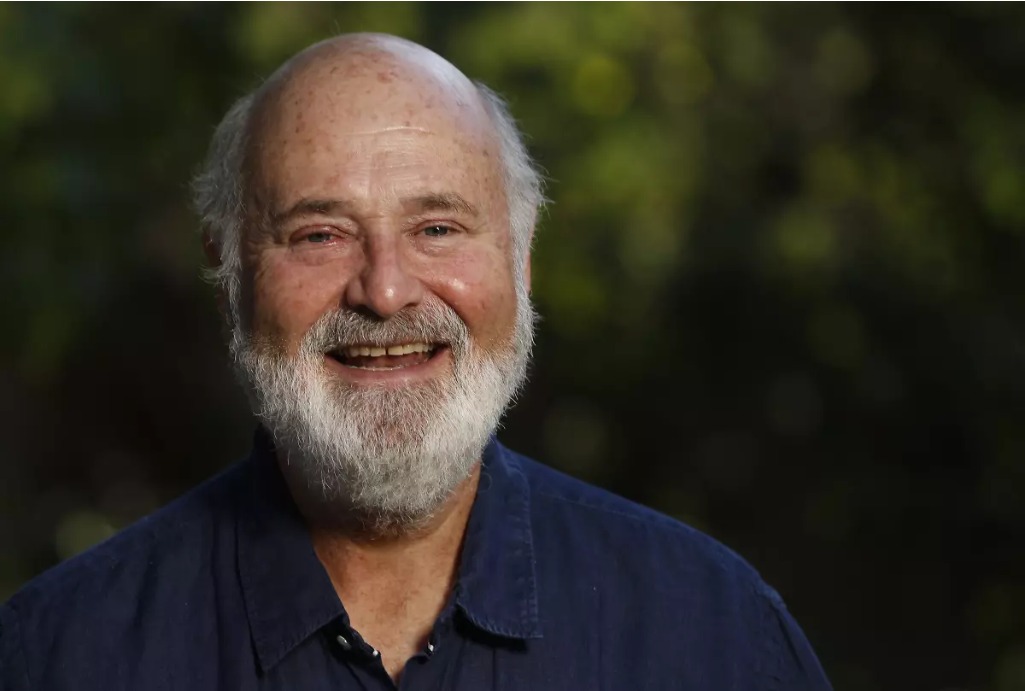
There are filmmakers who leave fingerprints on Hollywood, and then there are filmmakers like Rob Reiner, whose work doesn’t just leave fingerprints — it’s practically written into the walls. You don’t even have to be a film buff to know his movies. They’re the ones people quote at dinner parties without realizing it, the ones your parents accidentally raised you on, the ones you stumble onto during a lazy Sunday and suddenly find yourself watching again, even though you’ve seen them ten times.
Rob Reiner’s influence isn’t loud or self-celebratory. It’s woven through American culture in a way that feels almost accidental — like he wasn’t trying to build a legacy, he was just trying to tell a good story and somehow ended up shaping entire genres along the way. When you line up the films he directed, it’s almost unfair. The Princess Bride, Stand By Me, Misery, When Harry Met Sally, A Few Good Men, This Is Spinal Tap — it reads like a cheat sheet of the last 40 years of pop culture. Wikipedia
And yet, Reiner’s story isn’t just about the movies. It’s about a man who grew up surrounded by comedy royalty, who carved out his own voice in a place where it’s very easy to get lost in someone else’s shadow. It’s about a filmmaker who moved from acting to directing to political activism with a kind of steady conviction that rarely shows up in Hollywood. And maybe most importantly, it’s about a guy whose work somehow manages to be funny, tender, sharp, warm, and utterly human — sometimes all in the same scene.
Quick Facts: The Iconic Filmography of Rob Reiner
Before we dive into his journey, here is why Reiner is considered a “chameleon” director:
| Movie Title | Genre | Key Impact |
| This Is Spinal Tap | Mockumentary | Invented the modern “fake documentary” style. |
| Stand By Me | Coming-of-Age | Defined the emotional weight of childhood friendship. |
| The Princess Bride | Fantasy/Comedy | Created the most quotable cult classic in history. |
| When Harry Met Sally | Rom-Com | Established the blueprint for modern movie romance. |
| A Few Good Men | Courtroom Drama | Delivered the most iconic movie monologue of the 90s. |
Contents
Growing Up Reiner: Comedy at the Dinner Table
If you’re going to talk about Rob Reiner, you have to start with his father, Carl Reiner. Growing up in that household was like living in the epicenter of a comedy earthquake. Imagine wandering into your living room to find Mel Brooks and Dick Van Dyke debating joke structure the same way other families debate grocery lists.
That was Rob’s “normal.” These early years gave him a built-in intuition about timing and sincerity. It taught him that characters are funny not because they tell jokes, but because they are real, flawed humans.
But being Carl Reiner’s son also came with pressure. Imagine trying to become an artist when your father is already a legend. Every creative kid knows that feeling of “I want to be good, but please don’t compare me to him.” For Rob, that comparison was baked into his name. So instead of trying to outrun it, he built his own lane.
Meathead and the First Spotlight
Before he ever yelled “Action!”, Reiner became a household name as Michael “Meathead” Stivic on All in the Family. The show was a laboratory for Reiner. Working with Norman Lear was like earning a master’s degree in character dynamics. However, acting wasn’t the end goal; Reiner always had his sights set on the director’s chair.
The show was a laboratory for Reiner — about conflict, about rhythm, about how comedy can sit right up against anger or sadness and somehow make the whole thing feel more honest. Working with Norman Lear was like graduating with a master’s degree in character dynamics before he even realized he was taking the class.
But acting wasn’t the dream. Reiner has said many times that he always wanted to direct — he just didn’t know when or how he’d be allowed to do it. Hollywood can be funny that way. It loves to lock people in boxes: “Oh, you’re the comedy guy” or “You’re the sitcom kid,” and once that happens, it’s hard to convince anyone to give you the keys to a movie.
Reiner didn’t wait for someone to hand him permission. He just made the kind of film that nobody else would think to make.
The Mockumentary That Became a Monster: “This Is Spinal Tap”
In 1984, Reiner did something no one else was doing. He didn’t just make a comedy; he created a fake reality. What makes This Is Spinal Tap a masterpiece isn’t just the absurdity—it’s the sincerity. Every mockumentary that followed, from The Office to What We Do in the Shadows, owes its life to Reiner’s understanding that parody only works if the characters believe in their own delusions.
That’s Reiner’s signature: sincerity in the middle of chaos. He didn’t mock musicians; he honored the emotional logic behind their delusions. That’s why Spinal Tap didn’t fade into the background as some quirky experiment. It became foundational to modern comedy. Every mockumentary that came afterward — Best in Show, The Office, What We Do in the Shadows — owes something to Reiner’s understanding that parody doesn’t work unless the humans inside it are real.
Why Rob Reiner’s Movies “Live in Your Chest”
Reiner has a rare gift for switching genres without losing his soul.
- Stand By Me: He captured the moment innocence gives way to awareness. He didn’t direct “child actors”; he guided young souls through a story about the emotional weight of growing up.
- The Princess Bride: Executives didn’t know who this movie was for. Reiner’s answer was: Everyone. By treating a fairytale with genuine affection rather than irony, he created a miracle that is still passed down through generations.
- When Harry Met Sally: Alongside the brilliant Nora Ephron, Reiner poked around in a tricky place: what people actually do when they like each other. It’s the only rom-com that feels like it understands you without judgment.
“The Princess Bride”: A Miracle Wrapped in Humor
If Stand By Me touches your heart, The Princess Bride grabs your imagination and refuses to let go. It’s one of those rare films that feels like it was meant to be passed down. It’s quotable in the way Shakespeare is quotable, except people actually enjoy quoting it.
Executives didn’t understand the script. A fairytale? With jokes? But also romance? And action? And sword fights? And meta humor? “Who is this movie for?” they asked.
Reiner’s answer, essentially, was:
Everybody.
And he was right.
The film works because Reiner treated every moment — even the ridiculous ones — with genuine affection. He once said that the secret was to play the fantasy sincerely and let the humor emerge naturally from the characters. That’s exactly why the movie endures. It feels like a bedtime story told by someone who believes in wonder but also knows kids are smart enough to catch a good joke.
“When Harry Met Sally”: The Blueprint for Modern Romance (Even If No One Meant It to Be)
It’s hard to explain just how much When Harry Met Sally changed the cultural temperature when it arrived. Romantic comedies weren’t new, of course — Hollywood had been churning out boy-meets-girl stories since before sound was invented. But most rom-coms lived in a world of fantasy. Reiner, teaming up with the brilliant Nora Ephron, decided to poke around in a much trickier place: what people actually do when they like each other.
The brilliance of the movie isn’t in its punchlines, though they’re razor-sharp. It’s in the pauses — the way Harry and Sally talk around their feelings, the way they pretend not to care, the way they sabotage themselves out of fear. That’s real life. That’s the stuff nobody was putting onscreen at the time because it felt too small, too grounded, too… ordinary.
But Reiner has always had this instinct that the ordinary stuff is where the truth lives. He understood that audiences don’t fall in love with characters who are perfect. They fall in love with characters who remind them of their own worst habits.
When people say When Harry Met Sally is the greatest romantic comedy ever made, what they really mean is that it’s the only rom-com that feels like it understands them deeply and without judgment. Reiner didn’t just direct a romance — he accidentally created the emotional compass for every rom-com that came after.
Swerving into Darkness: The “Misery” and “A Few Good Men” Era
Just when Hollywood tried to label him the “feel-good” guy, Reiner swerved into psychological horror with Misery. He proved he could direct darkness just as well as light.
He followed this with A Few Good Men, a film that remains a masterclass in disciplined, muscular direction. The “You can’t handle the truth!” moment sits in a category of its own, becoming cultural shorthand for confrontation and ego.
The Activist: Using a Platform for Purpose
Unlike many who treat activism as a “Hollywood hobby,” Reiner has been a consistent, passionate voice for democracy and social responsibility. Whether involved in ballot initiatives or political campaigns, he has often sacrificed “industry influence” to speak his mind. Agree or disagree with his politics, there is an undeniable earnestness to a man who cares this deeply about the future.
He didn’t do it quietly.
He didn’t do it strategically.
He did it because he felt he had to.
Rob Reiner has never pretended to be neutral. He speaks like someone who genuinely worries about where the country is heading — someone who sees political engagement as part of being a responsible citizen, not a “Hollywood hobby.” He’s been involved in campaigns, ballot initiatives, and debates that have nothing to do with movies and everything to do with his vision of a fair society.
Hollywood has a lot of politically outspoken figures, but Reiner is different. He doesn’t use activism to build influence — if anything, he sacrifices influence for the sake of activism. He’s willing to be polarizing, even mocked, because he cares more about the issues than the applause.
Agree or disagree with his politics, there’s something undeniably earnest about a man who cares this much.
A Director Who Slipped Into Legend Status Almost Accidentally
If you look at Rob Reiner’s filmography, the strangest part is that he never set out to be a “legend.” He just wanted to tell stories that felt real. Maybe that’s why so many of his films became generational touchstones. They weren’t designed for awards or trend-chasing. They were made with this almost old-fashioned belief that audiences connect to sincerity.
And here’s the weird truth about Rob Reiner: he doesn’t have a “signature style.” In Hollywood, directors love to have a trademark — a look, a camera move, a mood. Rob Reiner never committed to one. Instead, his signature is emotional honesty. You might not recognize one of his movies by the visuals, but you’ll recognize them by how they make you feel: understood.
Very few filmmakers can jump from broad comedy to deep romance to psychological horror to military drama and still feel like they’re speaking the same emotional language. But Rob Reiner does because the engine behind all his stories is the same: people trying to figure themselves out.
And honestly, what’s more universal than that?The Hollywood Reporter
Why Rob Reiner Still Matters in 2026
In a landscape currently dominated by franchises and CGI “content factories,” Reiner’s work feels rebellious. Audiences are starving for authenticity. Reiner’s movies feel handmade and emotionally aware.
He matters because people matter. He never forgot that a great story doesn’t need a massive explosion—it just needs a heartbeat.
Conclusion: A Career Built on Heart, Fearlessness, and a Little Magic
Rob Reiner’s career is proof that sincerity never goes out of style. He’s made films that will outlive us all, built on a simple belief: If you tell the truth, the audience will follow you anywhere.
What is your all-time favorite Rob Reiner film? Is it the nostalgia of Stand By Me or the wit of The Princess Bride? Let us know in the comments below!
For more deep dives into the legends of film and culture, check out our latest coverage on Sherrone Moore and other icons at our Global Echo USA featured hub.