
We all want financial security, but certain money habits that keep people broke often run silently in the background of our daily lives. Money problems are often blamed on low income, inflation, or rising living costs. While those factors matter, research shows that financial habits play a much bigger role in long-term financial stability. In fact, studies show that many people who earn high salaries still struggle financially because of everyday money decisions.
Affiliate Disclosure: Some links in this article are affiliate links. If you click through and sign up for these tools, I may earn a small commission at zero extra cost to you. This helps support the blog!
Today, millions of people are stuck in a cycle where they work hard but still feel financially stressed. A recent survey found that about 60% of Americans say their financial situation has stayed the same or worsened recently, showing how common financial struggles are.
The truth is simple: wealth is rarely built overnight. It’s built—or destroyed—through small daily habits.
Let’s pull back the curtain on 10 hidden financial traps you might be falling into right now—and exactly how to reverse them.
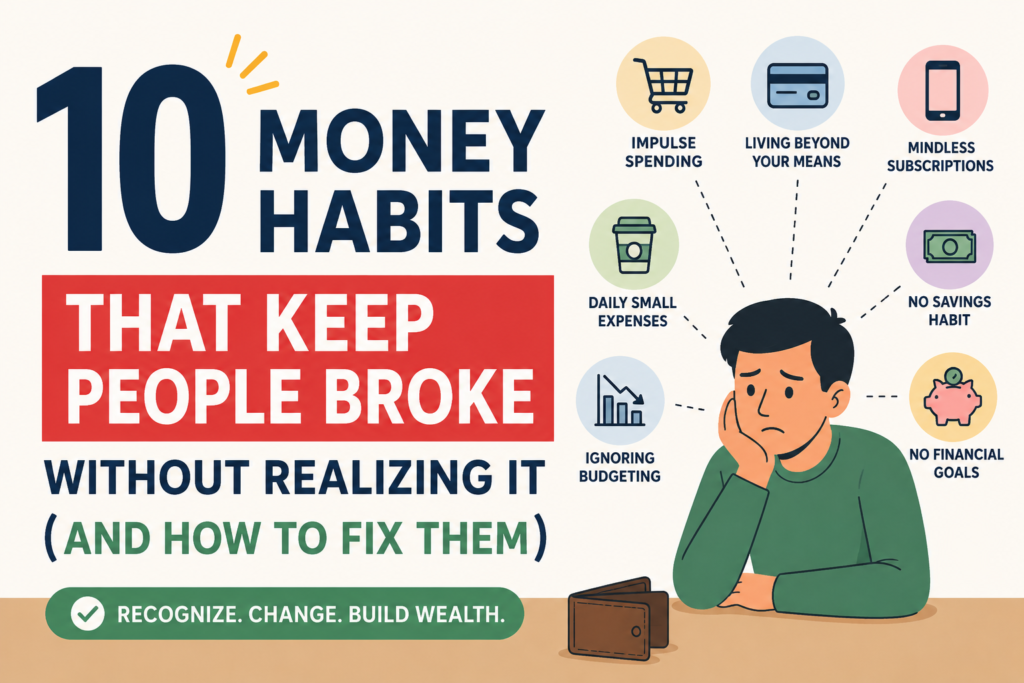
Table of Contents
A Quick Look at Financial Stress in 2026
To understand why this happens, look at how the average consumer handles their cash flow today:
Financial Reality Snapshot
| Financial Behavior | Percentage of People |
|---|---|
| Americans who say they overspend | 83% |
| People who have exceeded their monthly budget | 84% |
| Consumers living paycheck to paycheck | Around 24% |
| People reporting financial stress due to spending decisions | Over 80% |
These numbers highlight an important reality: financial habits—not just income—drive financial outcomes.
1. Living Without a Budget
One of the biggest financial mistakes is simply not knowing where your money goes. Without a budget, it’s easy to overspend on everyday things like food delivery, subscriptions, or shopping.
Financial experts often compare budgeting to a GPS system for your money—without it, you’re just guessing where your finances are heading.
Even people who have budgets frequently go over them, especially when they don’t track spending regularly.
How to fix it
Use a simple system like the 50/30/20 rule:
- 50% needs (rent, bills, groceries)
- 30% wants (entertainment, lifestyle)
- 20% savings and investments
If you struggle to track your spending manually, using dedicated budgeting apps like YNAB or PocketGuard can automate the process and keep you accountable.
2. Lifestyle Inflation
Lifestyle inflation happens when your spending increases every time your income increases.
For example:
- Salary increases from $3,000 to $4,000
- Instead of saving more, spending also rises
People upgrade apartments, cars, vacations, and gadgets.
Eventually, income rises but financial progress stays the same.
This is one reason even high-income earners can still live paycheck to paycheck.
How to fix it
Whenever income increases:
- Save at least 50% of the raise
- Invest before increasing lifestyle spending.
3. Impulse Spending
We’ve all been there—it’s 11 PM, you’re scrolling through your phone, and suddenly you’ve bought a vintage jacket you don’t need. Online shopping has made impulse buying dangerously seamless.
Unfortunately, repeated impulse purchases often lead to overspending and financial stress.
Many people don’t realize how much they spend on small purchases until they review their monthly bank statements.
Example
| Small Purchase | Monthly Cost |
|---|---|
| Coffee | $80 |
| Streaming subscriptions | $40 |
| Food delivery | $150 |
| Online shopping | $120 |
Total: $390 per month
That’s $4,680 per year.
How to fix it
Use the 48-hour rule:
Wait 48 hours before buying anything non-essential.
To combat the urge to buy instantly, consider installing automatic price-comparison browser extensions or using cashback apps that force you to pause and check for real discounts before checking out.
4. Ignoring an Emergency Fund
Unexpected expenses happen to everyone—whether it’s sudden car repairs, unexpected medical bills, or a sudden job loss. Without an emergency fund, many people are forced to rely on credit cards or high-interest loans, which quickly traps them in debt.
How to fix it
Start small:
- Save $500 first
- Then build toward $1,000
- Eventually reach 3 months of expenses
The best place to park your emergency cash is in a dedicated High-Yield Savings Account (HYSA). This keeps your money separate from daily spending while allowing it to earn competitive interest.
5. Relying Too Much on Credit Cards
Credit cards can be useful—but they also encourage overspending.
Many people spend more when using cards compared to cash.
Data shows that about 44% of people use credit cards to pay for purchases when they exceed their monthly budget.
Over time, this creates a dangerous cycle of high-interest debt, making it one of the most stressful money habits that keep people broke.
How to fix it
Use credit cards strategically:
- Only spend what you can pay off in full
- Avoid carrying balances
- Track spending weekly.
6. Not Setting Financial Goals
Saving money becomes difficult when you don’t know what you’re saving for.
Studies show that many savers never set clear financial goals, which makes progress harder to track.
Without goals, money often gets spent instead of saved.
How to fix it
Create clear goals such as:
- $5,000 emergency fund
- $50,000 house down payment
- $500 monthly investment
Clear targets make financial progress measurable.
7. Ignoring Investing
Saving money alone isn’t enough.
Inflation slowly reduces purchasing power.
Investing allows money to grow over time.
People who delay investing often lose years of compound growth.
Example of compound growth
| Monthly Investment | 20 Years | 30 Years |
|---|---|---|
| $200 | ~$98,000 | ~$227,000 |
Even small investments can grow dramatically.
Getting started with investing doesn’t require thousands of dollars. Mainstream financial platforms like Fidelity, Robinhood, or Webull allow you to begin investing with fractional shares for as little as $1 to $5.
8. Emotional Spending
Many purchases are driven by emotions rather than needs.
Examples: We’ve all done it—you have a stressful day at work, and you end up stress-shopping or buying things out of pure boredom just to get a quick hit of dopamine.
These purchases may provide temporary satisfaction but often lead to regret later.
How to fix it
Replace emotional spending with healthier alternatives:
- exercise
- hobbies
- social activities
9. Following Social Media Lifestyles
Social media has created a culture of comparison spending.
People often feel pressure to keep up with:
- luxury travel
- expensive gadgets
- designer fashion
- fancy restaurants
However, many of these lifestyles are funded through debt.
Trying to match them can quietly destroy financial stability.
How to fix it
Shift your focus toward long-term personal financial goals instead of keeping up with temporary online trends. Breaking away from social comparison is essential to defeating the hidden money habits that keep people broke.
10. Ignoring Financial Problems (The Core Money Habits That Keep People Broke)
One of the biggest hidden habits is ignoring financial problems until they become serious.
Many people delay dealing with:
- debt
- budgeting
- saving
- investing
The longer financial issues are ignored, the harder they become to fix.
How to fix it
Take small actions immediately:
- track spending this week
- start saving $50
- pay off one small debt.
Original Insight: The “Silent Spending Trap”
After analyzing spending patterns across many financial surveys, one hidden issue stands out:
Silent Spending
These are small recurring expenses people forget about.
Examples:
| Hidden Expense | Average Cost |
|---|---|
| Unused subscriptions | $30/month |
| App purchases | $20/month |
| Convenience fees | $15/month |
| Food delivery tips | $40/month |
Total: $105 monthly
That equals $1,260 per year lost to unnoticed spending.
Fixing just this one issue can dramatically improve finances.
Using the right tools can help you break the cyclical money habits that keep people broke. Here are a few great places to start:
- Budget planner
- Investment app
- Personal finance books
- Expense tracker
The Bottom Line on Breaking the Cycle
Most people believe financial success depends on earning more money.
But in reality, financial success is mostly about how you manage the money you already earn. Overcoming the money habits that keep people broke doesn’t happen overnight, but small changes add up.
Small habits like budgeting, avoiding impulse spending, investing early, and setting financial goals can completely change your financial future.
Remember:
Financial freedom doesn’t come from one big decision.
It comes from hundreds of small smart choices over time.
Reader Question
Which of these specific money habits that keep people broke have you noticed creeping into your own daily life?
- Overspending
- Lifestyle inflation
- No budget
- Impulse shopping
Share your thoughts in the comments—your experience might help someone else improve their finances.
Pingback: Google Pixel 9 Review 2026: Is It Really Worth the Money?
Pingback: AI Could Replace High-Paying Jobs by 2030 — Experts Warn