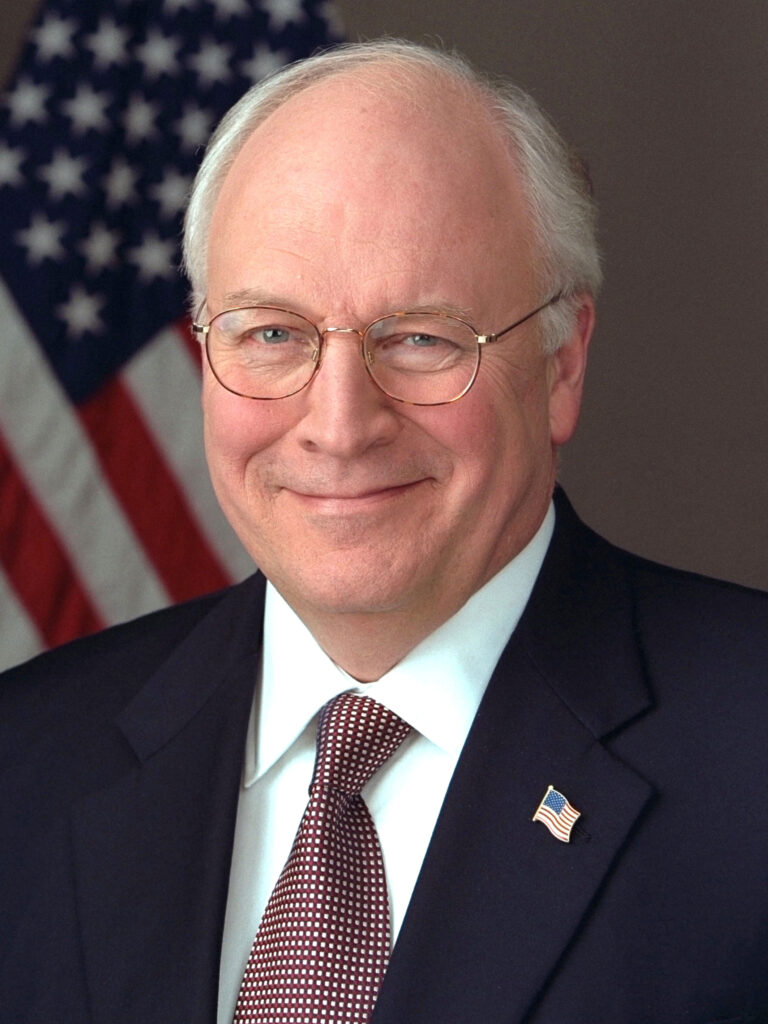
The name Dick Cheney traces a path from rural Nebraska and Wyoming to the very centre of American power. Over the course of decades, he shifted from legislator to executive, from private-sector leader to perhaps the most influential vice president in U.S. history. His legacy is a mixture of high achievement, fierce controversy and enduring impact. In this article, we’ll explore his life, his health, his controversies, his family, his net worth, the well-known hunting incident, the film portrayal, and finally the question on many minds recently: did Dick Cheney die, and if so, what did he die of?
Early Life and Education of Dick Cheney
Born on January 30, 1941 in Lincoln, Nebraska, Richard Bruce Cheney (who would later be known simply as “Dick Cheney” or sometimes stylised “Dick. Cheney”) spent his formative years in Casper, Wyoming. Wikipedia Encyclopedia Britannica Raised in a modest household, Cheney was exposed early to politics and public service, shaping his worldview.
He briefly attended Yale University but did not graduate from there, instead earning a BA and MA in political science from the University of Wyoming. These academic credentials provided him the platform to enter public life.
From an early age, Cheney showed a blend of ambition and pragmatism—a hallmark of his career. He combined an intellectual grounding with a keen sense of political realism, a combination that would serve him well in Washington and beyond.
Entering Public Service: From House of Representatives to White House Chief of Staff
Cheney’s early high-profile roles set the tone for his career. He was elected to the U.S. House of Representatives for Wyoming’s at-large district in 1978 and served six terms. He also became minority whip for the House Republicans, showing early recognition of his leadership ability. Encyclopedia Britannica
Before his time in Congress, Cheney served as White House Chief of Staff to President Gerald Ford, becoming the youngest person ever to hold that position at age 34. Biography His performance in that role displayed his organizational acumen, political savvy and familiarity with national security and executive branch operations.
These roles equipped Cheney with extensive knowledge of governmental systems, bureaucracy, legislative process and the levers of power. Such preparation would serve him when he stepped into higher-level roles.
Secretary of Defense: Cheney’s First Major National Role
In 1989, Cheney was confirmed as the 17th U.S. Secretary of Defense under President George H.W. Bush. Defense Historical Office During his tenure, he oversaw key military operations, including the invasion of Panama (Operation Just Cause) and the first Gulf War against Iraq (Operation Desert Storm). SMU His time at the Pentagon cemented his reputation as a hard-nosed realist on defense and foreign policy. He prioritized military readiness, force structure reform, and a muscular posture at a time
when the Cold War was ending. He said later that the Gulf War decision was among his toughest choices. Miller Center
This phase of his career demonstrated Cheney’s capacity to handle large-scale national decision-making—and set the stage for his later role as Vice President, where many of these experiences would converge.
Private Sector and Return to Politics
After leaving the Pentagon in 1993, Cheney stepped into the private sector and became CEO of Halliburton, a major energy services and construction company. ir.halliburton.com His time in business added another layer to his profile: a mix of public service and private enterprise.
In the run-up to the 2000 presidential election, Cheney re-entered the political arena when he was selected by George W. Bush as his running mate. He played a major role in shaping the campaign, the transition team and ultimately, the administration that followed. His business acumen, defense credentials and legislative experience made him a formidable figure, prepared to handle the complex role of Vice President. The private sector stint arguably broadened his worldview and network beyond the strictly political realm.
The Vice Presidency (2001-2009): Who Was Dick Cheney Vice President For?
Dick Cheney served as the 46th Vice President of the United States from January 20, 2001 to January 20, 2009 under President George W. Bush. Wikipedia
He was more than a typical “second-in-command.” Many analysts consider him the most powerful vice president in U.S. history, thanks to his strategic influence, strong relationship with the President, and active engagement in policy, especially in national security and energy. Miller Center
His role included advising the President, coordinating interagency efforts, and at times making key decisions in the wake of 9/11. The Bush-Cheney administration would leave a mark on U.S. foreign policy, domestic security, and the role of the vice presidency.
Key Moments: 9/11, War on Terror & Iraq War
The terrorist attacks of September 11, 2001, transformed U.S. national security policy—and Cheney was at the center. In the immediate aftermath, he became a key decision-maker in how the government would respond. Wikipedia
Under the Bush-Cheney administration, the “war on terror” became the dominant theme: invasions of Afghanistan and Iraq, broad surveillance programs, enhanced interrogation methods, and a substantial expansion of executive power. Cheney was an early advocate of the Iraq War, asserting that Iraq posed a threat via weapons of mass destruction and links to al-Qaeda.
While many supported his decisions in the name of national security, critics argue the Iraq War hinged on faulty intelligence and led to long-term regional instability. Cheney’s hand in these momentous events ensures his place in history—and controversy.
Controversies and the Hunting Accident: Did Dick Cheney Shoot Someone?
One of the most well-known moments involving Dick Cheney was a hunting incident in February 2006. While duck hunting in Texas, Cheney accidentally shot his friend and fellow hunter Harry Whittington. Wikipedia
That incident spawned the popular question: “Did Dick Cheney shoot someone?” Yes—he did accidentally shoot Whittington. The affair was widely publicised, raising debates about accountability, secrecy (the incident was not immediately disclosed), and the media’s spin. The official term is the “hunting accident.”
Beyond that, Cheney faced broader controversies: the scope of his power as Vice President, his support for aggressive interrogation tactics, the CIA and NSA expansions, and the intertwining of corporate interests and government (e.g., his Halliburton past). He was substantively criticised for building what many call a “shadow presidency.” Wikipedia+1
All this means that when someone googles “Dick Cheney shooting accident”, the story lives on as one of his more dramatic personal missteps—though his political legacy is far broader.
Health, Heart Transplant & Later Life
Cheney faced persistent and serious health challenges throughout his adult life. He suffered multiple heart attacks (the first recorded in 1978) and underwent a quadruple bypass in 1988. Encyclopedia Britannica+1
In 2012, he received a heart transplant—an event that underscored both his fragility and resilience. He openly discussed health issues, including cardiac and vascular disease, and remained active in public life despite them. People.com
Questions like “Did Dick Cheney have a heart transplant?” are accurately answered: yes, he did. Similarly, “Dick Cheney health” is a topic that includes his decades of cardiovascular issues, fueled by lifestyle and genetics. When he eventually died on November 3, 2025 at age 84, the cause given was complications of pneumonia plus cardiac and vascular disease.
His health journey adds a human dimension to the man often seen as a titan of power—it reminds us that even the most formidable figures face mortal limitations.
Dick Cheney’s Net Worth, Business Ties and Legacy
While exact estimates of Cheney’s net worth vary, his business background (especially his tenure at Halliburton) and political career suggest significant accumulated assets. Searches for “Dick Cheney net worth” turn up reports attributing tens of millions of dollars to him, though public disclosure is limited.
His business ties have been a focal point of criticism—some argue that his time at Halliburton and his role in government created conflicts of interest. Nonetheless, his legacy is substantial. He changed the role of the vice presidency, had a profound effect on America’s post-9/11 policy, and redefined the contours of executive power in the U.S. Miller Center+1
When the question arises “What did Dick Cheney die of?”, the answer is among his health issues—but his broader legacy also encompasses what he did and stood for. His imprint is felt across foreign policy, domestic security, energy policy, and the Republican Party.
Family & Personal Life: Wife, Daughters and the Cheney Dynasty
Cheney married Lynne Vincent on August 29, 1964. Encyclopedia Britannica Lynne Cheney became a prominent public figure in her own right—author, scholar and political commentator. The couple had two daughters: Liz Cheney and Mary Cheney.
- Liz Cheney: served in the U.S. House of Representatives from Wyoming and became a national figure in her opposition to Donald Trump and defense of democratic institutions.
- Mary Cheney: more private, though notable for her role in the Cheney family and politics.
At many points, searches ask “Dick Cheney wife” (Lynne), “Dick Cheney daughter” (Liz and Mary), “why are the flags at half mast” (this occurs when a national or other notable figure dies, and following Cheney’s passing on Nov 3, 2025, national flags were lowered). These familial connections provide a fuller picture of the man behind the public persona.
Film and Culture: The “Vice” Movie and Media Portrayals
Cheney’s life became fodder for Hollywood and popular culture. The film “Vice” (2018) starred Christian Bale as Cheney and portrayed his rise from private citizen to one of the most powerful figures in Washington. The film explored his ambition, strategy and moral ambiguity.
Search terms like “Dick Cheney movie” or “Vice movie” reflect how his story transcended politics and entered cultural conversation. The film helped shape public perceptions of Cheney—both as a shrewd operator and a controversial power-broker. It is one of the major media portrayals capturing his complex legacy.
FAQs About Dick Cheney
Q1: Who is Dick Cheney?
A: Dick Cheney (Richard Bruce Cheney) was an American politician and businessman who served as the 46th Vice President of the United States from 2001-2009 under President George W. Bush. Encyclopedia Britannica
Q2: What was Dick Cheney’s net worth?
A: While exact numbers vary, Cheney accrued substantial wealth through his business career (including serving as CEO of Halliburton) and his political roles. The term “Dick Cheney net worth” refers to his financial standing, though it is not publicly disclosed in full detail.
Q3: Did Dick Cheney shoot someone or have a hunting accident?
A: Yes. In February 2006, Cheney accidentally shot fellow hunter Harry Whittington while duck hunting in Texas. It was widely covered and remains one of his most infamous personal incidents. Wikipedia
Q4: Was Dick Cheney a Republican?
A: Yes. Cheney was a member of the Republican Party throughout his career, from his time in Congress to his vice presidency.
Q5: Did Dick Cheney have a heart transplant?
A: Yes. Cheney underwent a heart transplant in 2012 after a long history of cardiovascular problems.
Q6: Who was Dick Cheney Vice President for?
A: He served as Vice President under President George W. Bush from January 20, 2001 to January 20, 2009. Wikipedia
Q7: What did Dick Cheney die from and when?
A: He died on November 3, 2025 at the age of 84. The family statement cited complications of pneumonia and cardiac/vascular disease as the cause of death.
Q8: What was Dick Cheney’s role in politics and national security?
A: Cheney held multiple high-level posts: U.S. Representative, White House Chief of Staff, Secretary of Defense, and finally Vice President. He was a major architect of the Iraq War and the U.S. “war on terror.”
Conclusion: Why Dick Cheney Still Matters
Dick Cheney’s story is one of ambition, power and consequence. From his humble beginnings to the commanding heights of American politics, his journey encapsulates the interplay between government, business and national security. He helped reshape the vice presidency into a role of unprecedented influence and left an indelible mark on U.S. foreign and domestic policy.
Yes, he died—but his legacy endures. Whether you regard him as a steady hand in crisis or a figure of controversy, the life of Dick Cheney is a case study in how individuals can steer the course of history. His narrative invites us to reflect on power, accountability and the enduring impact of leadership.