
Personal loans have become one of the most common financial tools Americans use today. Whether we’re dealing with medical expenses, credit card debt, emergency repairs, or rising living costs, many people turn to personal loans for quick financial relief.
But after researching lending trends, consumer debt reports, and real financial experiences, one thing became very clear: many Americans are making personal loan mistakes that quietly cost them thousands of dollars over time.
And honestly, most people don’t even realize it until they’re already stuck with high monthly payments, growing interest, or long-term financial stress.
The good news is that many of these mistakes are avoidable if we understand how personal loans actually work before signing agreements.
In this article, we’ll break down the biggest personal loan mistakes Americans are making in 2026, along with practical strategies that may help us borrow smarter and protect our financial future.
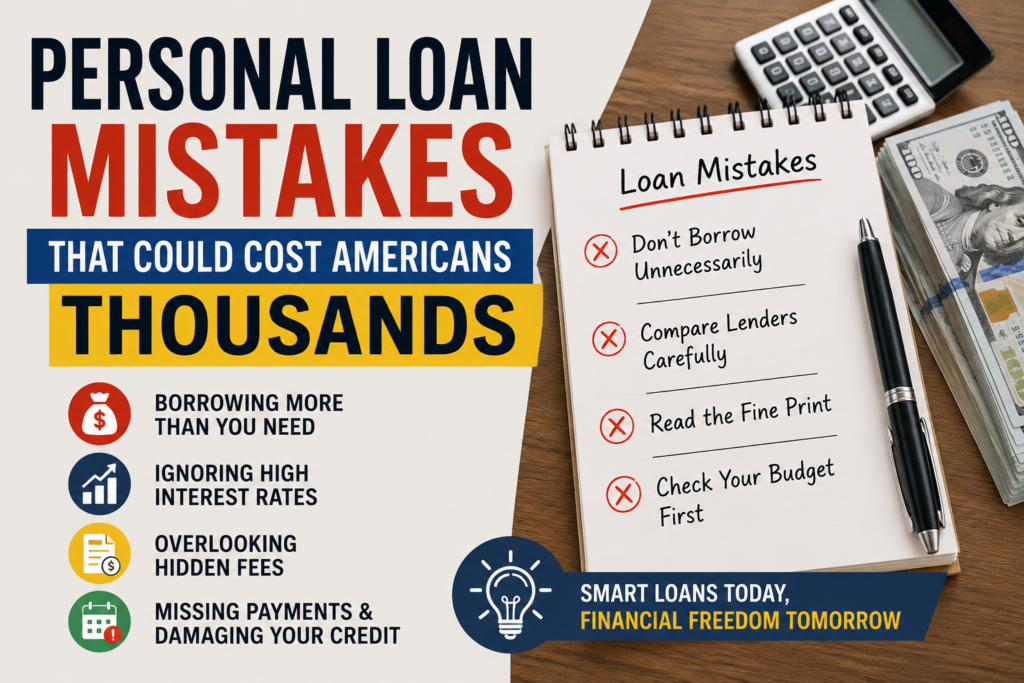
Table of Contents
Why Personal Loans Are Becoming More Popular in 2026
Over the last few years, personal loan demand has increased significantly across the United States.
There are several reasons for this:
- inflation continues raising living costs,
- credit card debt remains high,
- emergency savings are shrinking,
- and many households are struggling financially.
Personal loans often appear attractive because they offer:
- quick funding,
- predictable monthly payments,
- and fixed interest rates.
But while loans can provide short-term relief, poor borrowing decisions can create long-term financial pressure.
That’s why understanding personal loan mistakes is more important than ever in today’s economy.
1. Borrowing More Money Than You Actually Need
One of the most common personal loan mistakes people make is accepting larger loan amounts simply because lenders approve them.
Just because we qualify for a higher amount doesn’t mean we should borrow it.
Larger loans usually mean:
- higher monthly payments,
- more interest,
- and longer repayment periods.
Personal Research Observation
Just because a lender approves you for a $15,000 loan does not mean your budget can handle it. Accepting larger loan amounts simply because they are offered is a major trap. Larger principal amounts automatically translate to higher monthly payments, increased total interest over the life of the loan, and unnecessarily prolonged debt cycles.
During our evaluation of consumer borrowing habits, we noticed that many borrowers initially focus only on whether the monthly payment feels manageable today, completely overlooking the aggregate cost of the loan over a five-to-seven-year period. For example, borrowing an extra $3,000 at a 10% interest rate over 5 years adds hundreds of dollars in pure interest charges that could have been completely avoided. Restricting your borrowing to the exact amount needed for your immediate financial goal is a vital step in maintaining long-term financial stability.
2. Ignoring the Interest Rate Completely
Many borrowers pay attention only to the approval notification rather than the underlying interest rate structure, which can become incredibly expensive. A personal loan with a high Annual Percentage Rate (APR) combined with upfront fees can cost thousands more than anticipated. Even a small difference in APR can dramatically alter your total repayment terms.
To understand why APR matters so much, you must look at how it differs from a base interest rate. The APR represents the true total annual cost of borrowing because it bundles the interest rate together with mandatory lender fees, such as origination fees or processing costs.
For example, if you take a $10,000 personal loan with a 5-year term:
- At a 7% APR, your monthly payment would be roughly $198, and you would pay a total of $1,881 in interest.
- At a 12% APR, your monthly payment jumps to $222, and you will pay a staggering $3,347 in total interest.
That minor percentage gap costs you an extra $1,466 for the exact same loan amount. Comparing APRs across multiple lenders rather than focusing solely on the monthly payment is the only way to secure a competitive financial arrangement.
3. Missing Loan Payments
Late payments can damage:
- credit scores,
- lender relationships,
- and overall financial stability.
Many people underestimate how quickly missed payments create bigger problems.
Late fees, penalty interest rates, and collection activity can make debt much harder to manage.
One thing we consistently noticed during our research is that financial stress often becomes worse when borrowers stop communicating with lenders entirely.
Smart Strategy
Setting up:
- autopay,
- reminders,
- or payment alerts
can help reduce missed payments significantly.
4. Using Personal Loans for Unnecessary Spending
Utilizing personal loans to fund discretionary lifestyle choices—such as luxury vacations, high-end electronics, or non-essential consumer goods—frequently initiates severe financial hardship. Borrowing unsecured capital for depreciating assets or temporary experiences leaves you with years of fixed monthly obligations long after the initial utility of the purchase has vanished.
Reputable financial institutions and consumer advocacy groups advise that personal loans should be reserved strictly for strategic financial maneuvers. These include high-interest debt consolidation, unavoidable medical expenses, critical vehicle repairs, or home improvements that preserve or increase property value. Restricting loans to these categories ensures that borrowing serves as a tool for financial recovery rather than a gateway to unsustainable debt.
5. Not Checking for Hidden Fees
Some lenders advertise attractive, low interest rates but embed restrictive financial clauses deep within the loan agreement. Common hidden costs include:
- Origination Fees: An upfront processing charge (often 1% to 8% of the loan amount) that the lender deducts directly from your payout before you receive the funds.
- Prepayment Penalties: Fees charged if you attempt to pay off your loan early to escape interest charges.
- Late Payment Fees: High penalties applied the moment a payment window closes, which can rapidly compound your balance.
A thorough analysis of consumer complaints filed with regulatory bodies reveals that hidden fees are the primary driver of borrower regret. Many applicants skip reading the fine print in a rush to secure fast funding. Taking the time to read the disclosure terms carefully allows you to identify predatory lending terms and negotiate or avoid high-cost agreements altogether.
6. Applying for Too Many Loans at Once
When people struggle financially, they sometimes apply to multiple lenders rapidly hoping someone approves them.
But multiple hard inquiries may temporarily reduce credit scores.
Too many applications can also signal financial desperation to lenders.
Instead of applying everywhere, it’s usually smarter to:
- compare carefully,
- research lenders,
- and choose trusted options strategically.
7. Ignoring Your Budget Before Taking a Loan
Many borrowers focus only on getting approved without calculating whether future payments realistically fit their monthly budget.
That creates long-term stress.
Before taking any loan, we should honestly evaluate:
- income stability,
- monthly expenses,
- emergency savings,
- and existing debt.
One major issue we noticed during our research is that people often assume future income will improve automatically.
But unexpected events like layoffs, medical emergencies, or rising costs can quickly make loan payments difficult.
How Personal Loans Affect Credit Scores
Personal loans can either help or hurt credit scores depending on how they’re managed.
Positive effects may include:
- building payment history,
- improving credit mix,
- and lowering credit utilization if consolidating debt.
Negative effects may include:
- missed payments,
- hard inquiries,
- and higher debt levels.
Responsible borrowing is the key difference.
Smart Personal Loan Tips for 2026
If we truly need a personal loan, there are several ways to borrow more safely.
Compare Multiple Lenders Carefully
Interest rates vary significantly between lenders.
Even small differences may save large amounts over time.
Borrow Only What You Need
Smaller loans usually mean:
- lower stress,
- faster repayment,
- and less total interest.
Read the Fine Print
Understanding fees and repayment terms helps avoid unpleasant surprises later.
Focus on Fixed Rates
Fixed-rate loans offer predictable monthly payments, which can make budgeting easier.
Common Warning Signs of a Bad Loan
Identifying these red flags requires a proactive approach to consumer education. The Consumer Financial Protection Bureau (CFPB) actively monitors the lending marketplace to protect consumers from unfair, deceptive, or abusive practices. According to regulatory standards, legitimate lenders will always verify your creditworthiness and income stability before offering terms, rather than guaranteeing approval upfront. If a lender pressures you to sign paperwork immediately without providing a clear, written disclosure of the APR and fee schedule, it is a definitive signal to halt the application and seek a more transparent financial institution.
Why Americans Are Struggling With Debt More Than Ever
In today’s economy, many households are balancing:
- rising housing costs,
- inflation,
- expensive groceries,
- healthcare bills,
- and growing credit card debt.
That financial pressure often pushes people toward loans for temporary relief.
But loans don’t solve financial problems automatically. Without careful planning, they can sometimes create even bigger challenges later.
That’s why financial awareness matters so much in 2026.
Final Thoughts
Personal loans can absolutely be helpful financial tools when used responsibly.
But the biggest personal loan mistakes often happen when people borrow emotionally instead of strategically.
By:
- comparing lenders carefully,
- reading terms closely,
- borrowing responsibly,
- and protecting our budgets,
we can avoid many of the costly mistakes that trap borrowers in long-term debt cycles.
For many Americans, smarter borrowing decisions today may lead to greater financial stability and less stress in the future.