
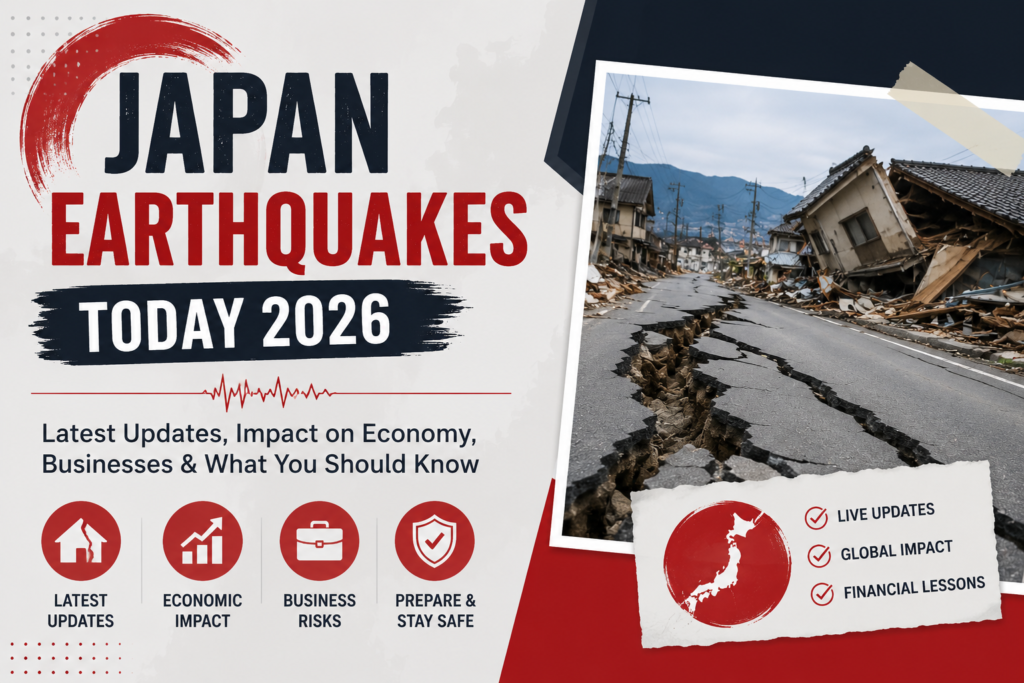
Japan earthquakes today 2026 are once again drawing global attention as strong seismic activity continues to affect several regions across the country. While the immediate concern remains public safety and emergency response, many people are also wondering how these earthquakes could impact businesses, financial markets, tourism, and the global economy.
In this article, we will explore the latest updates on Japan earthquakes today 2026, the possible economic consequences, supply chain disruptions, business risks, and the important financial lessons individuals and companies can learn from natural disasters. We will also share practical insights based on research and real-world examples to help readers better understand how major disasters can influence everyday finances and global markets.
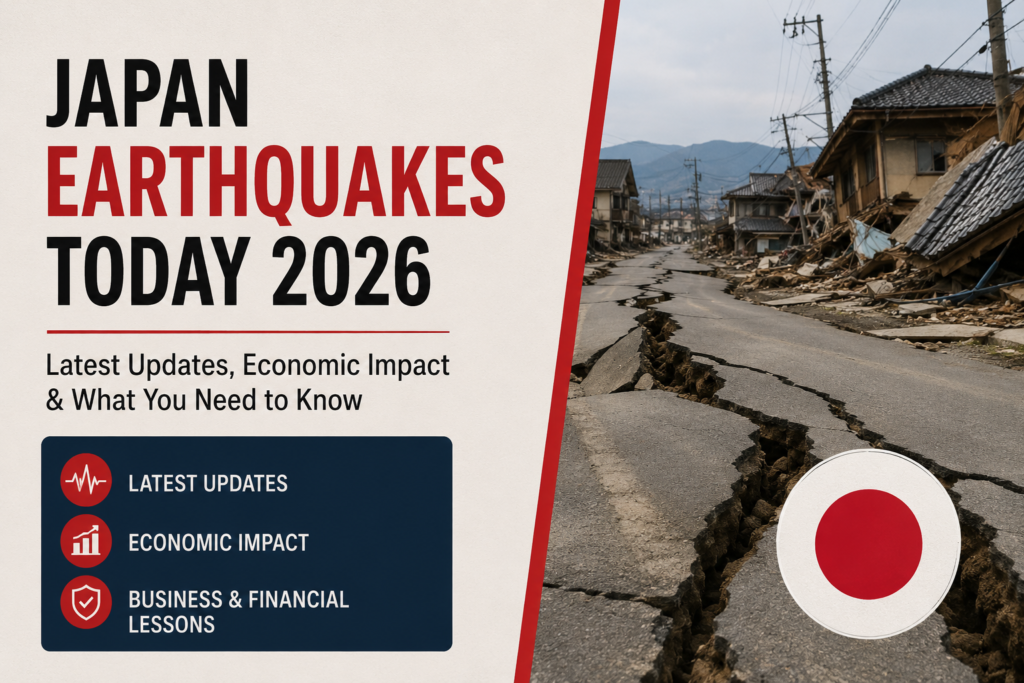
Table of Contents
Japan Earthquakes 2026: Latest Updates and Situation
Japan is one of the most earthquake-prone countries in the world because it sits on the Pacific Ring of Fire, an area known for intense seismic activity. Over the years, the country has built some of the world’s strongest disaster preparedness systems, but powerful earthquakes still create major disruptions.
Recent earthquakes in Japan during 2026 have caused transportation delays, temporary business shutdowns, infrastructure damage, and concerns about supply chains. Authorities continue to monitor aftershocks while emergency teams work to restore normal operations.
Although Japan is highly prepared compared to many countries, even short-term disruptions can affect industries across the globe.
How Japan Earthquakes Today 2026 Could Affect the Global Economy
Many people think earthquakes only impact local communities, but the reality is much bigger. Japan plays an important role in the global economy, especially in industries like:
- Electronics
- Automobile manufacturing
- Technology
- Semiconductor production
- Shipping and exports
When earthquakes interrupt factory operations or transportation systems, businesses worldwide can feel the effects.
Historically, major seismic events in Japan have led to significant delays in global car manufacturing, mobile phone components, computer chips, and industrial machinery. When key manufacturing hubs temporarily pause operations, it frequently triggers localized supply shortages and delivery delays across North America and Europe. This interconnectedness is exactly why global investors and financial analysts monitor natural disasters in industrial nations so closely.
Business Impact of Japan Earthquakes in 2026
One of the biggest concerns after any major earthquake is business continuity. while large companies may have insurance and backup systems, but smaller businesses often struggle more during disasters. Restaurants, local stores, tourism operators, and transportation services can lose revenue immediately.
Some major risks businesses face include:
Supply Chain Disruptions
Modern businesses depend heavily on global supply chains. If one factory stops production, multiple industries may be affected.
For example:
- Automobile Manufacturing: Car companies frequently face sudden parts shortages when tier-one suppliers in Japan experience power outages.
- Electronics and Tech: Tech brands may face tight inventory caps or delayed product rollouts if cleanroom facilities undergo safety inspections.
- Logistics: Export hubs and shipping ports can experience severe backlogs if surrounding rail or road networks require structural checks.
Even online businesses can face shipping delays if ports or transportation systems are disrupted.
Tourism Industry Losses
Japan is one of the world’s most popular tourist destinations. Earthquakes can temporarily reduce tourism as travelers cancel or postpone trips.
Hotels, local markets, restaurants, and travel agencies may experience reduced bookings for weeks or even months depending on the severity of the disaster.
This directly affects local economies and employment.
Insurance Industry Pressure
Natural disasters create large insurance claims. Companies providing earthquake insurance may face billions of dollars in payouts after major disasters.
This can sometimes lead to:
- Higher insurance premiums
- Stricter coverage policies
- Financial pressure on insurers
For homeowners and business owners, this is an important reminder about emergency financial planning.
What Investors and Financial Markets Watch During Earthquake
Financial markets process breaking news rapidly. During a major seismic event, analysts track specific economic indicators to gauge the depth of the disruption:
- Equity Markets: Spikes in regional market volatility as industrial stocks stabilize.
- Currency Fluctuations: Shifts in safe-haven asset trading, which occasionally impacts the relative strength of the Japanese Yen.
- Production Indexes: Output data from major tech and automotive corridors.
- Energy Security: The operational status of regional power grids and LNG terminals.
While markets generally show high resilience and bounce back once infrastructure safety is confirmed, the initial window of uncertainty highlights how deeply embedded regional stability is within global portfolios.
Personal Finance Lessons We Can Learn From Natural Disasters
One important thing we realized while researching disaster-related economic impacts is that emergencies often expose weak financial planning.
Natural disasters teach us valuable personal finance lessons that many people ignore during normal times.
Build an Emergency Fund
Financial experts often recommend keeping at least 3 to 6 months of emergency savings.
Unexpected situations like:
- medical emergencies
- natural disasters
- job loss
- temporary business shutdowns
can create financial stress very quickly.
Even small monthly savings can make a huge difference during difficult times.
Importance of Insurance
Many families underestimate the importance of insurance until emergencies happen.
Depending on your location, useful protection may include:
- health insurance
- home insurance
- renter’s insurance
- business insurance
While insurance cannot prevent disasters, it can reduce financial damage significantly.
Avoid Depending on a Single Income Source
One interesting trend we noticed during our research is that people with multiple income sources usually recover faster from financial disruptions.
Some common additional income ideas include:
- Freelance consulting or writing
- Building content sites and blogging
- Exploring affiliate marketing partnerships
- Creating scalable digital products
- Online tutoring or coaching
This does not mean everyone must start a business immediately, but diversifying income can increase financial stability.
Why Disaster Preparedness Is Also a Financial Strategy
Most people think disaster preparedness only means food supplies or emergency kits. But financial preparedness is equally important.
Here are a few practical steps we recommend:
Keep Digital Copies of Important Documents
Store secure backups of:
- Secure Digital Document Backups: Keep encrypted cloud copies of government IDs, insurance policies, deed records, and banking credentials.
- Prioritize Capital Liquidity: Ensure emergency funds sit in high-yield savings accounts or accessible vehicles rather than being entirely locked away in rigid, long-term investments.
- Audit Baseline Expenses: Maintain a clear, updated view of core survival expenses versus discretionary spending to adjust quickly if income drops.
- Target Toxic Debt: Aggressively reducing high-interest liabilities frees up monthly cash flow, leaving you far more agile during broader economic tightening.
Maintain Emergency Savings Access
Avoid locking all money into long-term investments without accessible cash reserves.
Track Monthly Expenses
Understanding your essential expenses helps during emergencies.
Reduce High-Interest Debt
Debt becomes harder to manage during financial uncertainty.
These small habits can improve long-term financial security.
How Media Coverage Influences Consumer Behavior
The flow of information plays a significant role in shaping real-world economic outcomes. Widespread reporting on supply chain anxieties, macro uncertainty, or localized damage naturally leads to more conservative consumer spending habits.
When uncertainty dominates the news cycle, households frequently defer major luxury upgrades or non-essential travel. This shift in sentiment directly impacts consumer-facing businesses, reinforcing the need for governments and corporations to communicate transparently and restore operational normalcy as quickly as possible.
The Bigger Picture: Climate Risks and Economic Stability
While earthquakes are strictly geological events rather than climate-driven phenomena, the broader rise in global systemic risks has forced a massive transformation in corporate risk management. Modern businesses are moving away from fragile, single-source operations and investing heavily in:
- Distributed, multi-region manufacturing setups
- Secure remote work infrastructure
- Localized supply chain nodes
- Predictive logistics and monitoring tools
Organizations that build these adaptive operational safety nets early remain far better positioned to weather unexpected structural shocks without dropping service quality.
What We Can Learn From Japan’s Preparedness
The reason communities and businesses across Japan manage to recover with remarkable speed comes down to an institutionalized culture of readiness. Decades of investment in seismic-resistant building designs, highly automated public warning networks, and regular community drills show the value of proactive planning.
The takeaway applies universally: systematic preparation drastically reduces chaotic reactions. Whether structuring a corporate operating budget or organizing personal savings, planning ahead turns potentially overwhelming disruptions into manageable hurdles.
Final Thoughts
The Japan earthquakes of 2026 are a reminder that natural disasters affect much more than physical infrastructure. They influence economies, businesses, financial markets, tourism, and even household finances worldwide.
While we hope affected communities recover quickly, these events also encourage us to think more seriously about financial preparedness, emergency planning, and economic resilience.
For businesses, the lesson is clear:
strong backup systems and flexible operations matter more than ever.
For individuals, even small financial habits like building savings, reducing debt, and diversifying income can provide stability during uncertain times.
As global economies become increasingly connected, events happening in one country can influence people and businesses worldwide. Understanding these connections helps all of us make smarter financial and business decisions in the future.